To produce detailed 3D assets, it used to be essential to invest in expensive software, as well as hours of manual work. Designers had to create models, refine textures and then optimize their models before they were suitable for production. Nowadays artificial intelligence is altering this process drastically. Thanks to modern tools that allow to generate the 3D model using images quickly this makes 3D design easier for business owners, professionals, and beginners alike.
3D AI Studio shows how technological advances have been made by allowing designers to move from an idea to final model in a fraction of the time that it took in the past.
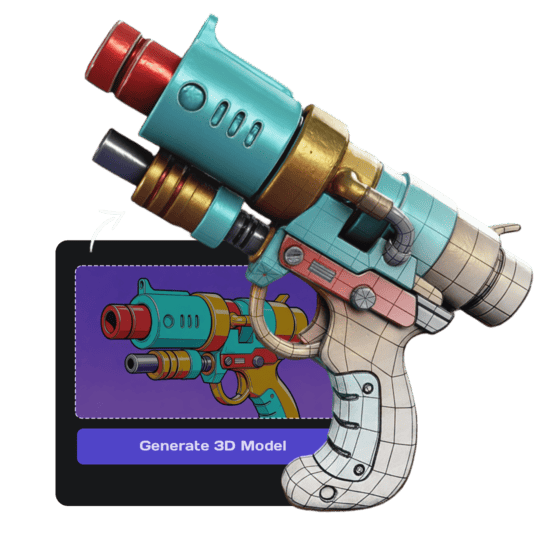
The Increasing Demand for Faster 3D Creation
The demand for high-quality 3D content is growing in many industries. Realistic visual assets are essential for presenting ideas and drawing viewers across a variety of industries, including gaming, product design and films, architecture, and ecommerce. Teams are seeking methods to develop models faster without sacrificing quality as the demand for them grows.
AI-powered workflows, image-to 3D modeling software, as well as free software are essential in this respect. Instead of beginning with complicated modeling software, creators can upload their images and let artificial intelligence analyse forms, edges and even textures. The software converts the visual data into the form of a 3D structure.
This method allows for more experimentation and cuts down on the amount of time needed to build assets.
Photo-to-3D Technology: How it works
When the photo to 3D model process starts an artificial intelligence analyzes the photo in depth. It recognizes patterns as well as predict depth, then recreate the object in 3D. The models are generated using advanced algorithms that have been trained on vast datasets.
This technology is a great tool to create rapid prototypes. Designers can snap a concept sketch or physical object, and then convert it to a digital model for further improvement. Developers can also create placeholder assets in a short time, which allows users to test designs or environments before investing time in highly complex modeling.
The tools that are available on platforms such as 3D AI Studio can automate steps like texturing and mesh optimizing, resulting in an end product that is appropriate for use.
Practical Benefits for Creators and Businesses
One of the biggest advantages of picture to 3D model technology is accessibility. AI-powered models reduce the technical barriers for 3D modeling, making it possible for more people to join in.
The effectiveness of the system is also a key benefit. Automated the generation of retopologies and textures eliminate repetitive tasks, allowing creators to focus on their design and creativity instead of technical procedures. Businesses also benefit, since faster production cycles result in faster project completion and reduced costs.
Marketing teams are able to create visual content more rapidly and educators can create interactive learning materials, and product designers can demonstrate prototypes earlier in design process.
Flexible Workflows and Organised Workflows Options
Modern AI platforms are capable of more than just generating models. They also assist in managing them. Asset libraries help users organize and store projects in a way that is organized. This makes it simpler to manage files and search for them.
The compatibility is equally important. The 3D models are exported to a range of formats extensively used, which permits seamless integration into game engines, rendering software, as well as 3D printing software. The flexibility of generated models allows the use of these assets across a range of professional workflows.
Look Ahead: AI-driven 3D Design for the future
The possibilities of 3D creation are increasing as the artificial intelligence advances. The future tools will be able to create complex models and environments in addition to automating other steps of the production process.
Creators will enjoy greater flexibility and control as well as speed when platforms like 3D AI Studio continue their advancement.
Conclusion
The ability to convert images into digital objects with realistic features has revolutionized the design process. Tools that convert images to 3D models without workflows make it possible to convert images into 3D model, or even a image into 3D.
The ability to generate an 3D image from a photograph is a crucial aspect of design in the next few years. It will enable designers to design their ideas quicker and more efficient.